Mark Ritson argues Grimace is worth more to McDonald’s than its Fifa World Cup deal
After a World Cup campaign that missed expectations and the end of its Fifa sponsorship, McDonald's can get more from its own mascot than from football stars, the columnist argues.
Mark Ritson, a former marketing professor, brand consultant and founder of MiniMBA, argues that McDonald's can generate more value from its mascot Grimace than it did from sponsoring the Fifa World Cup.
His case follows a World Cup campaign that McDonald's has admitted fell short, and the company's decision to end a Fifa partnership that began in 1994.
The biggest campaign in its history
In June McDonald's launched the largest campaign it has ever run: a World Cup meal sold in more than a hundred countries. It paired a Big Mac or McNuggets with fries, a drink and a pot of Big Mac sauce in World Cup-branded packaging, plus the real focus of the exercise, a collectible cup.
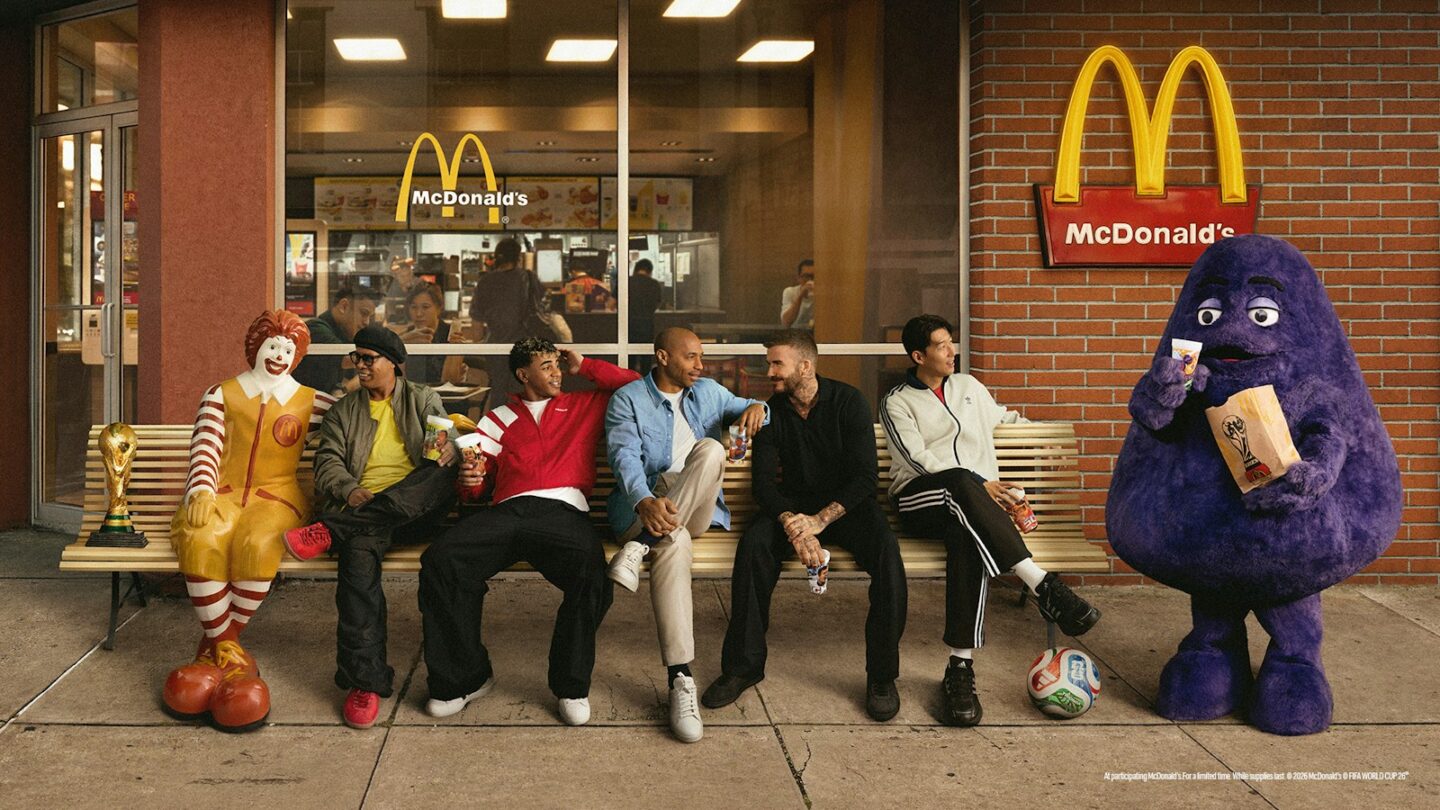
Most markets had six cup designs, with an extra three in North America. They featured Beckham, Henry, Ronaldinho, Son Heung-min and Lamine Yamal, along with Grimace, the only non-footballer in the main line-up, shown on a bench alongside the legends “like a purple substitute waiting to come on”.
Every cup carried a genuine anecdote linking its star to McDonald's. Henry had a customised order, Beckham a favourite sauce, and Yamal, according to the campaign, eats McNuggets for every occasion. Children were offered Squishmallows wearing national shirts.
Global CMO Morgan Flatley said “every piece of this campaign is designed with purpose” and that “no matter how big or famous you are, there’s a McDonald’s fan in everyone.” Ritson calls this “all decent stuff”.
A recognition problem
But he points out that the brand had a recognition problem before a ball was kicked. A Morning Consult survey carried out with Bloomberg in May found that just 24% of American adults linked McDonald's with the World Cup.
That was before the campaign started, but it meant that after three decades as a sponsor, three quarters of adults in its home market still failed to link it with the tournament.
Other sponsors were no exception in the same survey. Coca-Cola, a Fifa sponsor since the seventies that ran a big trophy tour and a huge number of ads, scored 36%. Adidas, which makes the ball, reached 27%. Nike, despite having no official sponsorship, scored 29%, ahead of both Adidas and McDonald's.
Ritson accepts the figures can be read positively. A quarter of America remains a big audience, and the percentages might have risen once the matches and marketing got under way. But the weak starting point was hardly a strong endorsement of a partnership dating back to 1994, he says.
Nor, he argues, did the tournament itself deliver a sponsorship triumph. Kantar monitored 11 official partners and sponsors over the event and saw almost no material rise in awareness of their sponsorship. McDonald's did see improvements in its Net Promoter Score and in social buzz with younger consumers.
Yet the campaign is reported to have cost almost $80m in World Cup rights for the 2026 cycle on its own, before activation costs across more than a hundred markets.
‘Underperformed versus our expectations’
On the company's Q2 earnings call in August, chief financial officer Ian Borden said the campaign “provided a lift to the business and generated excellent system excitement.” Ritson dismisses this as the standard line from any CFO whose company has spent nine figures, joking that the Titanic's CFO would have described the sinking as “an excellent opportunity to test safety protocols.”
More unusually, Borden went on to concede that the campaign “underperformed versus our expectations.” US same-store sales rose just 0.8% in the quarter, traffic missed expectations and the company blamed the World Cup campaign for around a third of the shortfall in traffic.
Ritson suggests the premium World Cup meal may have drawn customers up and away from the value tier just as stretched American consumers were looking for a cheap lunch. Borden's admission, he says, points to a real trade-off, even if it was not the intent.
McDonald's confirmed last week that its Fifa deal, in place since 1994, will end with this tournament and will not be renewed.
‘Borrowed IP’
Ritson describes Flatley's explanation for the company's wider rethink as the most interesting thing a McDonald's marketer has said in years. “I think we’ve become overly reliant on borrowed IP,” she said.
Flatley said the company should “be very selective and do it a few times” instead of attaching other people's properties to its calendar every quarter.
McDonald's is holding on to Ligue 1 McDonald's in France and Formula 1 in Latin America, as well as the All-American Games. It also has naming rights to McDonald's Park, a new Chicago soccer stadium due to open in 2028. Ritson notes that all of them run year-round, giving more scope for distinctive experiences and less reliance on an event that comes round every four years.
That, he argues, is the key point. For decades CMOs have paid millions to have their logo compete with a dozen others for “Official Sponsor” status at the biggest events and properties. He points to Formula 1 press conferences held in front of backdrops crammed with logos. The overall effect is disappointing at best and, as McDonald's has now found, often invisible.
Ritson suggests that a big Fifa or F1 deal is a sign that an ad budget is too big, “and certainly too stupid”. Global brands do benefit globally from global events, he accepts, but the economics have limits when so many brands are doing the same thing and the price is so high.
“A World Cup sponsorship rents a crowd that, by definition, is not looking at you,” he writes. That crowd is watching the pitch, with ten other brands shouting at it at the same time.
He notes that Kantar's finding of “almost no material increase in sponsorship awareness” came even though Fifa took in around $2.7bn from sponsorship and marketing rights over the 2023–26 cycle.
Owned fame versus rented fame
Every dollar McDonald's put into raising the profile of Beckham and Yamal also benefited the players and Fifa, Ritson argues, whereas Grimace is owned outright. When the brand gave the character a birthday shake in 2023, it went viral by itself and helped power a quarter of 10.3% growth in US same-store sales, without any rights fee.
For Ritson, the Grimace cup on this summer's bench gave the game away. The brand's own purple mascot was performing the same role as five football greats, and he will never ask for a new contract.
He adds that, according to Kantar, the brand with the most buzz among young Americans going into this World Cup was Nike. It released a six-minute film, ‘Rip the Script’, made by Wieden+Kennedy, which put Ronaldo and Haaland on screen with Kim Kardashian and deliberately tore up Nike's own World Cup playbook. The broader campaign continued over the summer.
Nike pays Fifa nothing and is not a sponsor. Kantar found Nike started the tournament with more buzz among 18- to 34-year-olds than any other brand it tracked, at 75%, beating all 11 official companies paying for rights.
Ritson acknowledges that this measures people talking about the brand and does not prove the film was responsible for the whole figure. But it is the kind of number sponsors use in pitch decks to justify their fees, and Nike achieved it without paying for rights or getting its logo on official hoardings.
He traces the approach back to 1996, when Nike covered Atlanta in its advertising while Reebok was the Olympic rights holder. Rights buy permission, he argues, but they also come with plenty of restrictions and a huge bill.
Not the end of sponsorship
Ritson stresses that sponsorship is not dead. Coca-Cola should probably stay, he says, because its whole proposition is about being there whenever people come together, and it can afford the activation spending needed to get value from the rights. Keeping Pepsi out is an added bonus. Adidas makes the ball, so it should also remain.
But McDonald's, he argues, is a quick-service restaurant with a mascot better known than most footballers, a hugely valuable Happy Meal franchise and a worldwide fan base it can reach each morning via its own app. It has no need to rent a crowd.
“Fame you rent is never really yours,” he writes.
In this story

Digital Gossip
News, people moves, campaigns, deals and opinion from across the UK’s agencies, marketing, media and technology businesses, written and edited by the Digital Gossip newsroom.
Send us a tip