
Allbirds sale shows sustainability must be built into operations, argues Sandhya Sabapathy
The Kaleidoscope founder says the brand’s survival after the company’s pivot to AI undercuts the idea that purpose-led positioning is bad business.
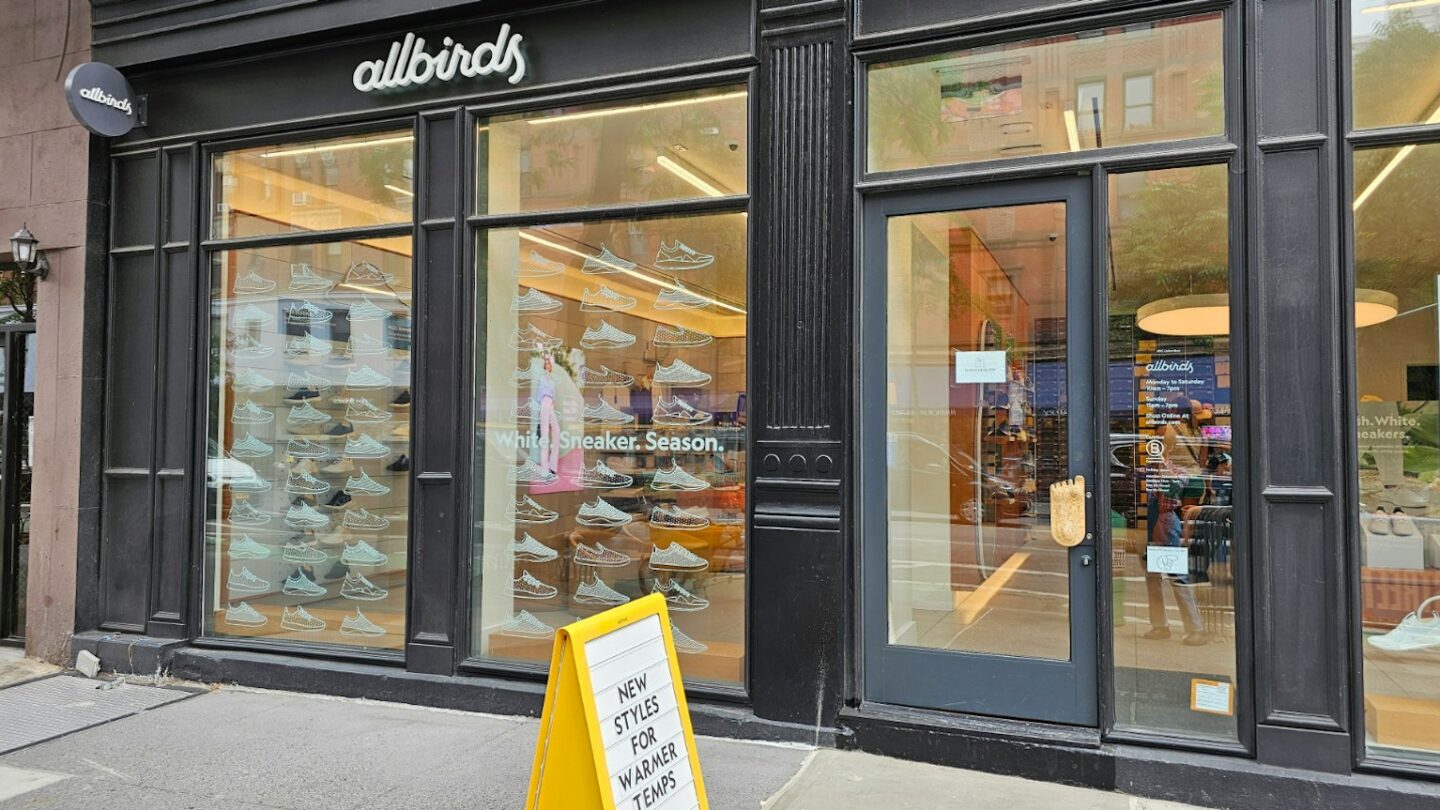
Sandhya Sabapathy, founder of advisory practice Kaleidoscope and a former FTSE 100 sustainability director, argues that the sale of Allbirds' footwear business is being misread as proof that sustainability does not pay.
The business formerly known as Allbirds now trades as Smartbird. For roughly two months before that it went by NewBird AI, during which it hired a chief executive with experience on Denmark's sovereign AI supercomputer. Earlier still, it was the maker of wool sneakers worn by Barack Obama.
In her book Burn Bright, Build Slow, Sabapathy described Allbirds as a sustainable footwear brand that had at one point been valued at $4bn. Before the book was in readers' hands, the listed company had offloaded its shoe business and turned to AI compute infrastructure, a move she says prompts its own questions about AI's environmental footprint. How quickly that U-turn happened, she argues, is why the wrong lesson has taken hold so fast.
That lesson, now widely repeated among marketers and technologists, holds that Allbirds proves sustainability is bad for business, that purpose has limits and that values are a luxury to be dropped once growth stalls. Trade commentary has argued that values-led positioning can differentiate a brand but seldom works as its foundation, and that purpose becomes a liability when a brand stops delivering. Sabapathy disputes that reading.
What the market paid for
She points to two sets of figures that tell different stories. On 15 April, the day the AI pivot was announced, Allbirds shares surged 582% in one session. They closed at $16.99, up from $2.49 the session before, after touching $24.31 during the day. The announcement set out an AI infrastructure strategy supported by a $50m convertible financing facility.
By 29 October the shares were down to $2.12, below their level before the announcement. Investors, she writes, briefly paid a huge premium for a new story and then withdrew it.
The second figure comes from footwear. American Exchange Group, together with WSG Brands, bought the Allbirds intellectual property and shoe assets, including trademarks, stock and customer lists, in a deal first valued at around $39m.
Sabapathy accepts that the sum is not a price for sustainability on its own. But the buyer gained a well-known name whose identity had been shaped for ten years by natural materials and environmental responsibility, from merino wool and sugarcane soles to carbon labels on the box.
The brand held on to its commercial value even after the original company's change of direction failed to deliver sustainable growth, which she says complicates the claim that its sustainability positioning was worthless.
American Exchange, a brand management and manufacturing group, plans with WSG Brands to grow Allbirds through licensing, new categories and broader distribution. Allbirds shoes will still be made, but Sabapathy asks how much of the founding sustainability commitment will last under the new owners' model.
The brand has outlived the company that built it, she writes, but whether the values also outlive it is another matter. Ten years of positioning produced an asset strong enough to outlast its creator, yet what that asset stands for can be reinterpreted under new ownership.
Claims versus commitments
Her central argument, which she calls “a marketing point as much as an ethical one”, is about structure.
Shareholders voted in June to amend the company's charter, and as it became Smartbird the business gave up its public-benefit corporation status. Sabapathy notes that a pledge embedded in a charter can be reversed by a corporate process.
Stripping merino wool out of a supply chain designed around it is harder, because it means changing sourcing, manufacturing and possibly the product's economics. That, she argues, is the gap between a claim and an operational commitment. Claims can be traded away fast, while a commitment embedded in operations costs time and money to unpick, and that cost is part of why it is believable.
Under Impact Prism, the methodology her firm uses with leadership teams, this falls within the reputational lens. She says she has seen businesses promise more on sustainability than their operations can deliver, and once they come under scrutiny, the mismatch turns into reputational risk.
That does not mean the shoe business was in good health. Third-quarter revenue for 2025 was down 23.3% on the previous year and many shops had already shut. Allbirds had moved into leggings, underwear and golf shoes, among other categories, to see whether its materials story would stretch into new markets.
Sabapathy describes that as a growth problem, and says reading the collapse as a verdict on sustainability would teach marketers the wrong lesson.
Questions for brands
She suggests brands ask three things this quarter: what would stop working operationally, not just in marketing, if their sustainability positioning disappeared tomorrow; who would need to sign off the changes; and how long that would take.
If the honest answers are nothing, a single committee and one afternoon, she says the position is exposed. When growth slows, marketers may have to justify the spend with little to show beyond sentiment tracking, which she calls a hard argument to win.
Her advice is to identify where sustainability is already embedded in operations, such as a supplier contract, a material specification or a reformulation that would need a capital request to reverse, and to build positioning on those foundations, with fewer claims more tightly linked to how the company works.
Brands should then state this plainly, she adds, so customers have grounds to believe the work would continue if the campaign ended.
She says Allbirds got this partly right and partly, at considerable cost, wrong. Its brand outlasted the original footwear business, and the task for marketers is to make the commitments underpinning a brand's reputation equally durable.
In this story

Digital Gossip
News, people moves, campaigns, deals and opinion from across the UK’s agencies, marketing, media and technology businesses, written and edited by the Digital Gossip newsroom.
Send us a tip