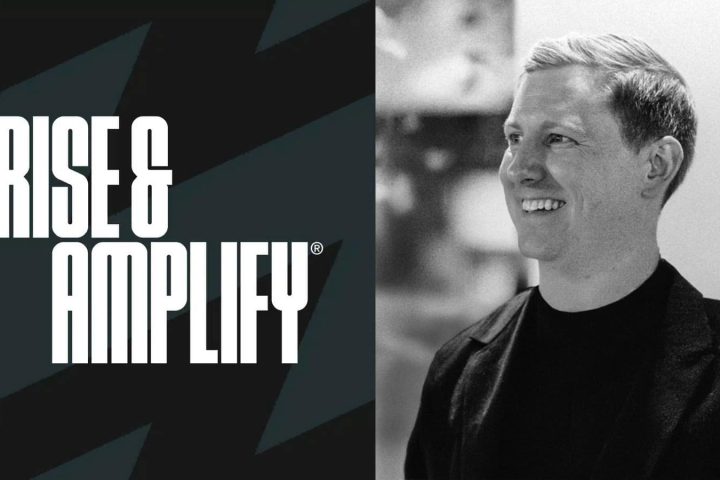
UEG’s Jarrod Moses launches venture arm to take equity in brands instead of fees
UEG Ventures shares in growth above a brand’s forecast and wants to expand from about a dozen portfolio companies to 20, with two to four exits planned.

United Entertainment Group founder Jarrod Moses has launched UEG Ventures, a growth-focused business that takes stakes in brands and is paid on the results it delivers rather than through retainers and campaign fees.
Moses grew UEG into one of the best-known partnership agencies in marketing, and many in the industry credit him with recognising early on how commercially valuable Taylor Swift could be. He says agencies can no longer stand outside the deals they put together.
“The whole secret with UEG Ventures is about being inside the deal with clients versus just charging them a fee,” he said. “We need to be in it for success and shared success versus just having them retain us as an agency. We don’t believe that the future of the business is just retainers; we believe it’s all value-based propositions.”
A World Cup of endorsements
The launch follows a 2026 Fifa World Cup that was one of the largest showcases of celebrity marketing ever staged. Footballers including Mohamed Salah, Lionel Messi and Jude Bellingham, and actors such as Javier Bardem, Matt Damon and Timothée Chalamet, featured in campaigns that ran across TV, social media, digital billboards and streets worldwide.
David Beckham, the ex-England captain who now owns Inter Miami, was everywhere. More than ten years after he stopped playing, he fronted work for brands including Pepsi, Adidas, Lay’s, McDonald’s, Verizon, Stella Artois and Bank of America. Observers estimate he will earn multi-millions in endorsement income from the tournament.
Moses believes that while many brands still treat celebrity partnerships as high-profile endorsement deals, the model itself needs to change.
From agency to growth partner
UEG was founded in 2007 and made its name brokering celebrity tie-ups, IP deals, entertainment integrations and creator relationships. Its clients have included Fortune 500 businesses as well as athletes, celebrities and media properties in a range of sectors.
“UEG has been in business for 19 years and has been a bit of a rocket ship,” Moses said. “Our secret sauce is creating opportunities for brands by utilising our access and our intelligence in the entertainment marketplace.”
That success, he said, exposed a weakness in the traditional agency model. “What we missed over the course of these 19 years is that we left a lot of opportunity on the table because we were making these brands famous and successful and we were missing out on that upside.”
UEG Ventures combines investment, creative strategy and access to talent to help brands grow faster and gain cultural relevance. It holds equity in its client businesses and ties its pay to the growth achieved.
How the model works
The venture arm agrees growth targets with each brand and then shares in any performance above existing forecasts.
“We look at the trend line that’s been established and we say that is fine. We understand this is your trend line, you’re going to do this without us, but when we come on board, whatever that delta is between what you’re doing and what we create together is how we get compensated,” Moses said.
Speed is also rewarded. “If we reach point A to B in 18 months versus 36 months, we get compensated on shortening the horizon.”
Deals can also be linked to how effective the marketing is, by comparing results from partnerships and cultural relevance with what a brand might achieve through conventional media spend.
“We truly believe that if you can work with us and we can bring this cultural relevance and partnerships to the table, we’re going to accelerate your brand, we’re going to reach your KPIs, and we’re going to bring more impressions than anything in the traditional ecosystem,” he said.
The brands it wants
Moses said UEG Ventures is focused on three types of business. “The three sweet spots for us are distressed brands, challenger brands or nascent brands. You’ve got to be hungry. We love working with people that are in second place or, frankly, in last place, because they’re hungry, they’re ambitious and so are we.”
“The brand has to have a clear identity and an ambition of where it wants to go,” he added. “We like to see that there’s an opportunity with a brand that it has a clear identity of what it stands for, but also it has an ambition of what it wants to become.”
Work begins with what he calls a qualitative exercise. “We start with almost a psychological session first, which is like, tell us about yourself, tell us what you want to become, what are your frustrations, what are your challenges.” Only after that does the team look for partners, creators or celebrities who could drive growth.
Paris Hilton and McCormick
One of the first deals under the model paired US spice maker McCormick with Paris Hilton. The venture arm negotiated a deal lasting several years between McCormick and 11:11 Media, Hilton’s company, spanning both campaigns and product collaborations.
It also recently helped set up a partnership between customisable soda brand Cool Sips and reality TV personality Whitney Leavitt for a new Cool Syrups product line.
Angela Filippone, UEG Ventures’ VP for global marketing and special projects, said authenticity is the most important ingredient. “If a talent doesn’t believe in the product, then there isn’t going to be that long-term growth or sustainability for the brand,” she said. “They’re not going to push it authentically through their own channels, through their own ecosystem of activity.”
That often means talent taking smaller upfront fees in return for a long-term share in a brand’s growth. “There have been frequent opportunities where we’ve matched tier-one talent with these challenger brands coming to the market, where they’re not getting a big check, but they truly believe in the product and want to be long-term with this product,” Filippone said.
Partner, not proprietor
Moses believes marketers still approach talent deals the wrong way. His advice is “Partner over a proprietor,” meaning talent should share in long-term value rather than simply endorse a product for a fee.
“Don’t lease the space, have a real partner who’s going to run with you for the long term, because at the end of the day that’s what counts versus somebody that’s just leasing the time with you,” he said. “Make sure you structure your deal so that they’re incentivised for the upside and they’re not just taking the check and running.”
Growth plans
UEG Ventures has around 12 portfolio companies. “Right now we have about a dozen portfolio clients inside of Ventures,” Moses said. “I think we’d like to see that get to 20 and then I think we’ll hold a bit and develop those for six months. The second piece would be to have two to four exits over the next six to 12 months.”
He also wants to expand beyond the US into Europe and the Middle East.
In this story

Digital Gossip
News, people moves, campaigns, deals and opinion from across the UK’s agencies, marketing, media and technology businesses, written and edited by the Digital Gossip newsroom.
Send us a tip