
PR and marketing in 2026: agency leaders share their predictions
Northern agency figures expect AI to become an everyday utility, independents to profit from holding company upheaval and authenticity to matter more than ever.
After a year dominated by AI and by a run of mega-mergers that left independent agencies wondering whether they would be next, leaders from across the PR and marketing sector have set out what they expect from 2026.
Lucy Pritchard, managing partner, Dentsu Creative Manchester
Pritchard says that if 2025 was about AI hype, 2026 will be when the industry works out how to use it properly. “At Dentsu Creative, we believe that AI isn’t here to kill creativity – it’s here to take care of the boring, repetitive stuff that slows us down,” she says. “The magic of creativity still comes from people: real experiences, cultural context, and those little nuances no algorithm can ever truly nail.”
She expects audiences to tire of content that looks too polished. With loneliness and disconnection at record levels, she argues, authenticity will matter more than ever, and brands will commit further to social platforms and influencer partnerships to embed themselves in culture and create experiences that feel genuine. “We’ve seen this shift building for a while, and it’s not slowing down – it’s speeding up,” she says.
She predicts campaigns built on transparency, vulnerability and storytelling grounded in human insight, with Dentsu Creative focusing on meaningful connections with its clients’ audiences.
Brad Hill, strategy director and co-founder, SUPERSONIC
Hill admits it is no surprise that someone who co-founded an independent creative agency is hoping 2026 will be good for independent creative agencies. “Please let it be a good year for independent creative agencies. Please,” he writes.
As holding companies swallow, merge and drop agencies, he believes the biggest casualty, beyond the thousands of people made redundant, may be creativity itself. “Nothing kills creativity quite like a corporation,” he says.
With AI “providing a shortcut to average”, he hopes independents can become the home of bold, experimental creativity and persuade clients of its value. He points to the creativity championed by Bill Bernbach, adding that even if the agency carrying his name disappears, he hopes his legacy survives in agencies outside the networks.
Ben Bateson, creative director and co-founder, SUPERSONIC
Bateson expects “the year of AI AI and AI”, but argues that this only increases the need for strong ideas to feed it. “Let’s not dismiss the power of the brain to come up with ideas. That is where we win. That’s what makes agencies different,” he says.
Rick Guttridge, CEO, Smoking Gun
Guttridge predicts “a paradox of a year ahead”, with smaller budgets but greater demands, innovation expected but less appetite for risk, and new skills needed alongside reduced investment in people.
He notes that budget pressure usually pushes marketers towards short-term performance activity, but says the rise of AI in consumer discovery puts brand strength and visibility at the centre of effective marketing.
On influencer marketing, he says Smoking Gun’s research among in-house marketers suggests budgets will polarise next year, partly because of uncertainty over how to measure non-affiliate activity. The result, he argues, is greater demand for ROI, and agencies offering measurement and effectiveness frameworks will stand out, “whether that’s a return on investment or return on interest.”
After what he calls “the blood bath of M&A activity at the top of the market”, he expects a wave of start-ups across the marketing mix and more high-quality candidates available to those able to hire.
But he is concerned for young people entering the industry. Changes to employment law and tax make hiring inexperienced staff more expensive than ever, he says, which could make non-graduate apprenticeships more popular. He questions whether the industry risks repeating the recruitment freeze that followed the 2008/9 crash, with a shortage of managers further down the line.
“One thing’s for sure, Winter is coming – yet the North’s resilience, collaborative and innovative mindset need to stay steadfast to prevent a total freeze,” he says.
Rob Shaw, CEO, HUB
Shaw, who is finalising HUB’s 2026 budgets, says he remains “optimistic for the year ahead as an independent.”
He expects AI debate to continue but believes smart agencies will now show practical applications. “The debate of ‘will this change the way we work?’ is concluded and the reality now is to show how these new tools and technologies can benefit the work delivered for clients every day,” he says.
He thinks the network groups’ difficulties will continue well into 2026 but not indefinitely. Once their operating models settle, he says, they will again be a serious competitor for smaller groups and independents, though well-structured independents should take advantage of the disruption in the meantime.
His final prediction is further growth in addressable streaming TV such as ITVX, as advertisers and media planners get to grips with the technical side of the platforms and use them more effectively, creatively and in terms of audience data.
Sara Donnelly, founder and director, Beyond Echo PR
Donnelly says a recurring theme in her conversations with marketers and founders is a move from content volume to content value. “Nobody, least of all AI search, cares about high-volume, low-value, bland content,” she says, arguing that this is becoming the deciding factor in whether brands can compete in an AI-driven world.
She predicts that next year’s winning agencies will not be those producing endless “white noise” blogs but those helping clients stand for something real. Original thinking, earned credibility, proprietary insight and genuine opinions, she says, are what journalists, stakeholders and AI systems will want to reference.
“Yes, we still need to optimise for algorithms, but in 2026, brands will also need to build meaning for humans,” she says.
She believes this is where PR comes into its own: generative engine optimisation (GEO) and answer engine optimisation (AEO) can get a brand found, but it is earned media and good storytelling that make people care. She expects a shift away from content for its own sake towards content as a commercial asset, with less focus on clicks and backlinks and more on building authority.
Behrooz Saeed, strategy director, Tall
Saeed argues that mega-mergers are opening up a big opportunity for independents in 2026, as holding companies spend the next 18 months untangling conflicting P&Ls and merging technology stacks and inevitably slow down.
“2026 will be the year of the ‘Specialist Sprinter’,” he says. He expects clients, already tired of paying for overheads they do not use, to move from rigid retainers to nimble, project-based specialist teams able to go from idea to live in days.
He also predicts AI will shift from “shiny toy” to “silent utility”. “It won’t be a line item on a pitch deck anymore; it will just be the plumbing,” he says. “The agencies that win won’t be the ones shouting about their AI tools, but the ones using them quietly to free up senior talent for high-level strategy and creative impact.”
In this story
 Behrooz SaeedStrategy Director, Tall
 Brad HillStrategy Director, Supersonic.
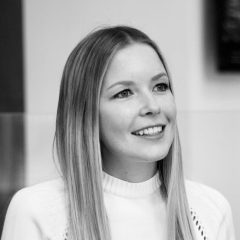 Lucy PritchardClient Partner, dentsuMB
 Rick GuttridgeCEO & Owner, Smoking Gun
 Rob ShawCEO, HUB
 Sara DonnellyFounder, Beyond Echo PR
- Beyond Echo PRAgency, Liverpool

- Dentsu CreativeAgency, Manchester

- HUBAgency, Leeds

- Smoking GunAgency, Manchester

- SupersonicAgency, Leeds
- TallAgency, Leeds


Digital Gossip
News, people moves, campaigns, deals and opinion from across the UK’s agencies, marketing, media and technology businesses, written and edited by the Digital Gossip newsroom.
Send us a tip

