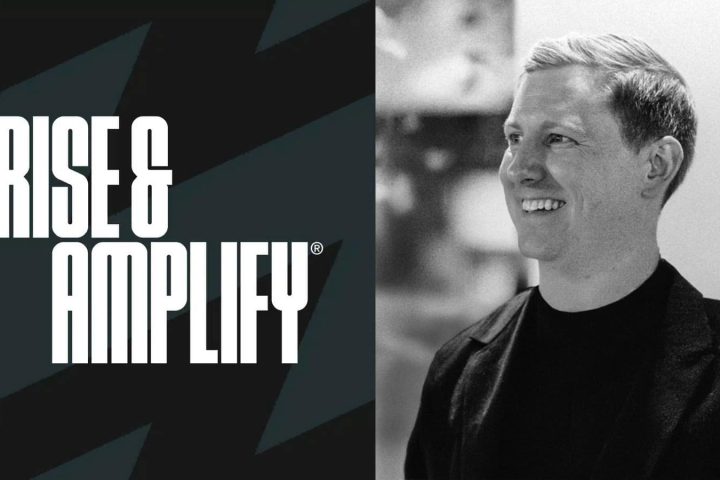
Park & Battery named Ad Age B2B Agency of the Year as founders back fame and flexibility
The four-year-old agency, now more than 80 people, credits recognition, relationships and a no-mandate office model for its growth, and says it is not building to sell.

Park & Battery has been named B2B Agency of the Year by Ad Age, a significant milestone for an agency that is only four years old. In that time it has expanded to more than 80 staff in North America and the UK, and has recently added Mexico City.
The agency has built its reputation on a distinctive, ambitious culture and a clear point of view, rather than grand claims about modernity, a fashionable office or a technology stack. Its growth is notable, though plenty of agencies can scale; fewer manage it without losing what made them interesting in the first place.
Fame as credibility
Its founders have a clear and somewhat unfashionable view of what drives agency success: fame, in a practical, commercial sense. Co-founder Ted Kohnen said “fame is a proxy for credibility.” With procurement teams and chief marketing officers drawing up shortlists to minimise risk, being known and talked about matters.
Many agencies still believe quiet competence and a well-built nurture programme will be enough. Park & Battery's approach is more direct: do great work, get it recognised and ensure it is seen, after which new business tends to arrive. Recognition, being known and being talked about all count when buyers want to avoid risk.
The second pillar is relationships. “If you are good to people, they will be good to you,” said co-founder Mike Ruby, who sees referrals and loyalty from past colleagues as a key source of growth. Neither idea is revolutionary, but the founders believe the fundamentals still matter and that reputation rests on work and behaviour rather than positioning decks.
Flexible by design
The agency is neither fully remote nor committed to a return to the office. It has offices in key cities but does not require staff to use them, which its founders say gives it access to better people.
“We get the best talent, no matter where they are,” Ruby said. “It has been a massive advantage, both culturally and from a business perspective.” It reflects the founders' view that an agency is its people, not its building, process or technology. Many in the industry talk about flexible working; few have put it into practice so thoroughly.
Intelligent audacity
Internally, the agency describes its approach to work as “intelligent audacity”, a phrase that describes a balance B2B in particular has long struggled to strike. The aim is to sit between strategically rigorous agencies whose work is forgettable and bold ones whose work lacks substance or commercial effect.
“There are agencies that are really smart but boring as hell,” Ruby said. “And others that are bold but mean nothing. The work only works when you have both.”
That ambition has not always been met in B2B, which is why the agency's early Cannes success, as one of the first B2B-led agencies to be shortlisted, carries weight. B2B now accounts for more marketing spend and economic value than consumer marketing, and arguably more complexity, yet still lags creatively and culturally. Park & Battery aims to close that gap through its work, its visibility and its outlook.
Not building to sell
Unusually, the founders say they have no plans to sell. “Our intention is not to build to sell. We want Park & Battery to live on long after we’re gone,” Kohnen said.
In an industry where scale, consolidation and exit are the usual path, that stance shapes decisions on hiring, clients and culture. The founders acknowledge they are selective about which work, clients and opportunities to pursue.
“We want to do things that are consequential,” Ruby said. “Work that matters for our clients, but also work that people remember and look up to.” It is a simple idea that is hard to carry out, and it requires the kind of steady conviction that growing agencies often lose along the way.
Why awards matter
Despite cynicism about awards, the founders see them as one of the few moments when the industry stops to judge what good looks like. “There’s no real feedback mechanism in advertising… Awards are one of the only times you get a room full of people actually watching and appreciating the work,” Ruby said.
Awards matter for standards as well as ego. The agency does not chase them for their own sake, but uses them to raise standards, prove credibility and build momentum. If it keeps balancing strategy with creative ambition, recruiting regardless of location and resisting the pull towards an exit, it is well placed to compete for further honours.
In this story

Digital Gossip
News, people moves, campaigns, deals and opinion from across the UK’s agencies, marketing, media and technology businesses, written and edited by the Digital Gossip newsroom.
Send us a tip