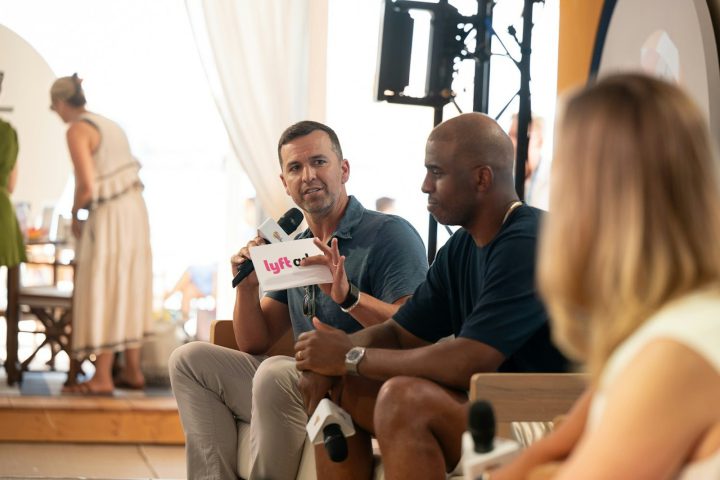
Airlines, hotels and banks are copying the retail media model, says The Trade Desk’s Jeff Daniel
Daniel argues that the most successful commerce media networks are becoming consultative partners, and that the bigger opportunity lies beyond selling inventory.

Airlines, hotel groups and banks are increasingly following the retail media playbook, according to The Trade Desk’s general manager of commerce data partnerships, Jeff Daniel, who argues that the biggest opportunity lies in solving advertisers’ problems rather than selling inventory.
The spread of commerce media beyond retail was a recurring theme at Cannes Lions this year. The open question is whether retailers are simply the first to realise that first-party data can support a new type of media business, or whether every company that deals with customers will eventually become one. Not everyone agrees with that vision, but the conversation is moving.
Daniel’s recently broadened job title reflects that shift. “We’ve evolved from traditional brick-and-mortar retail media networks into this much larger idea of commerce media networks,” he said.
From sales operations to partners
Retailers may have written the original rules, but Daniel says other businesses with rich first-party data, including airlines, hotel groups and financial services firms, are now applying the same principles, building advertising operations around customer relationships rather than just selling media space.
As a result, he believes the leading commerce media networks are acting less like media sales teams and more like strategic partners.
“The more successful media networks are becoming much more consultative,” he said. “They’re asking advertisers and agencies what they’re trying to achieve and helping build plans that might include onsite media, owned channels, offsite programmatic and measurement, rather than simply selling inventory.”
In the first years of retail media, by contrast, many networks required advertisers to stick to proprietary tools and measurement. “We’re seeing media networks open themselves up. Advertisers want different measurement capabilities. They want data that’s interoperable and easier to activate. They’re looking for flexibility,” Daniel said.
Connecting the journey
That flexibility goes well beyond websites and apps. Retailers are installing digital screens in stores, airlines have seat-back entertainment, hotels increasingly have connected TVs in every room, and audio is becoming another useful touchpoint in physical spaces.
Daniel says the task now is not building individual media assets but linking them into a coherent customer journey. “The consumer might see a connected TV advert, visit a website, engage with an app and then eventually make a purchase in-store or in a hotel. The bigger question is how you stitch all of those together.”
Combining media with customer insight is what increasingly sets commerce media apart from traditional media owners. Drawing on his work with brands and agencies, Daniel argues that retailers offer something many publishers cannot: direct knowledge of what customers buy and why.
“How can retailers bring insights that help brands overcome specific business challenges?” he said. “Instead of simply saying, ‘You should buy search’ or ‘You should buy display,’ it becomes a conversation about solving the business problem together.”
Dollar General sets the pace
Asked which companies are leading, Daniel named Dollar General, citing both its expanding media business and its willingness to collaborate with agencies and advertisers.
“It is listening to advertisers and agencies,” he said. “It is raising its hand and saying, ‘We hear what the marketplace needs.’”
He expects that to prove more sustainable than simply maximising onsite ad revenue. The larger prize, in his view, is full-funnel capability, new approaches to measurement and making it simpler for brands to put retailer data to work across the open web.
That is where The Trade Desk sees its role. Daniel describes the company not as a rival to commerce media networks but as the link between advertisers and retailers, helping brands use retailer data across the open internet and providing measurement of business outcomes.
“We’re in the privileged position of connecting those parties. Advertisers want to reach the right audiences across the open web, while retailers want to make their data accessible in a secure way. We help bring those strategies together.”
Room for new entrants
That matters more as new players enter the market. Although Amazon and other giants still dominate spending, Daniel does not see it as a zero-sum contest, and believes the market can keep growing if newcomers focus on creating value rather than selling media.
“The mistake,” he said, “is thinking only about selling inventory. The better approach is understanding what advertisers are trying to achieve and building solutions around those business objectives.”
He also thinks many retailers underestimate the organisational change needed. Merchandising, media, sales and marketing teams often still work separately, which limits what their commerce media businesses can achieve. “If you can bring those teams together around a common marketing technology stack,” he said, “that’s a huge unlock.”
Asked whether all media is becoming commerce media, Daniel gave a qualified answer. “I’d say all media should be driving outcomes. The funnel has been smooshed. Consumers can move from awareness to purchase in the blink of an eye. Commerce media naturally lends itself to that because it’s built around outcomes.”
Whether every media owner ends up as a commerce media business remains uncertain. But retailers are clearly no longer alone in thinking like media owners, and as first-party data grows in value, more organisations are taking the same approach, further blurring the lines between media, commerce and customer experience.
In this story

Digital Gossip
News, people moves, campaigns, deals and opinion from across the UK’s agencies, marketing, media and technology businesses, written and edited by the Digital Gossip newsroom.
Send us a tip