
Lyft builds ad business on ride data and partnerships with DoorDash, Chase and Hilton
Three years after launching advertising, Lyft's Shane Dwyer wants formats that improve the rider experience and sees 'mobility media' as distinct from retail media.
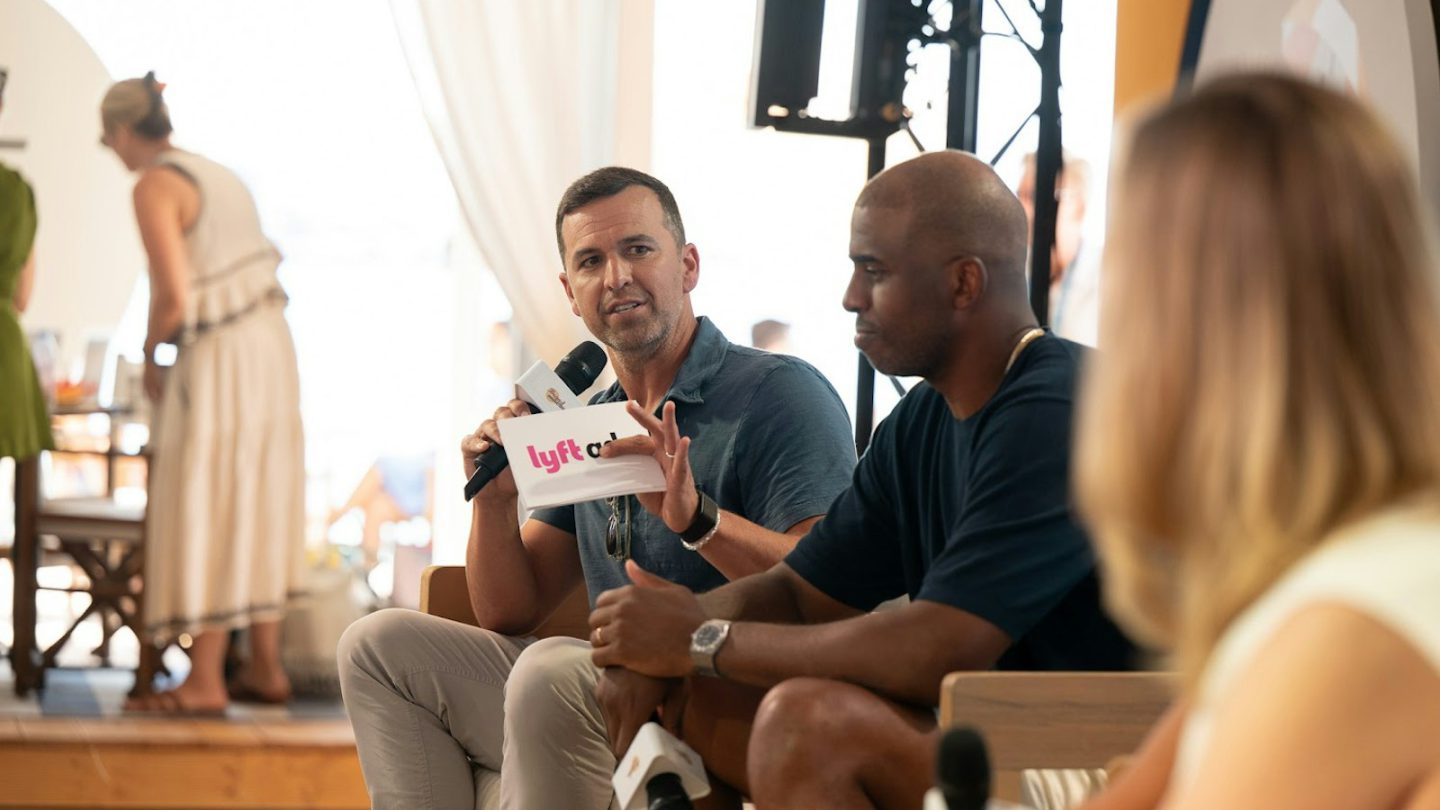
Lyft, which once had no interest in running an ad business, is now looking to partnerships and its own ride data to grow the advertising operation it has had for three years.
“An ads business was not something that Lyft wanted to do in the beginning,” said Shane Dwyer, vice-president of advertiser solutions at the rideshare app.
Dwyer, who moved over from Snap in 2023, said the hesitation came from the company's focus on its core service. “Lyft is all about rideshare, getting people from point A to point B. Our whole mission is to serve and connect. The thought process of adding an ad to the platform could be disruptive.”
Instead of disruptive, the word Dwyer uses for what he wants to build is “accretive”.
“We have something called the golden path, which means when you pick up the phone to get a car, that golden path cannot be disrupted. Everything has to be either better or at least flat in order to push an ad or product or use of data through. We’re trying to create an ad platform that’s accretive to the user experience; that actually gives people a benefit that is super relevant to where they’re going and where they just went.”
“My one true goal is: how do I build a massive business that helps support the rideshare business? How do I build a really relevant media business within a rideshare company that delivers high margins and enables us to pay it forward for the future of the business? That to me is really interesting.”
Ride data and the Rider Graph
The first part of his plan is data. By understanding more about the kind of ride a customer is taking, Lyft aims to serve ads that are more relevant and, Dwyer hopes, more useful to riders.
“Where I think we can win is being really relevant based on the ride category you’re taking,” he said. Lyft's ‘Rider Graph’ draws on ride history, vehicle type, payment method and other transaction data to judge relevance.
Better insight into customer behaviour also supports the company's wider “up, out, forward” strategy: growing high-volume rides (“up”), expanding beyond its North American core (“out”) and adopting new technology, for example through its recent Waymo partnership in Nashville (“forward”).
The strength of that data is why Dwyer is confident about a “mobility media” market, which he sees as related to but separate from commerce media. “To group Lyft and travel media into retail media is almost doing it a disservice,” he said. “Retail media is using a transaction from a merchant and using the ad to prove media efficacy or incremental sales… Our business is so different. It’s using transactional, first-party, deterministic ride intent data.”
He hopes the data can take marketers beyond identity. “Where are you going? Are you going home? Are you going to a restaurant? You’re a very different person at 5am when you’re getting up and taking a ride to the airport than you are when you land and you’re taking a ride to your hotel or, later that evening, when you’re taking a ride out to go see friends and family. You’re the same person, same device ID, same IP address, same Social Security number, same identity, but that movement created context that you can’t find in social media. You can’t find in the scrolling nature of other businesses.”
Partnerships
The second part is partnerships. Already 30% of Lyft's rides come through partners including delivery platform DoorDash, bank Chase, United Airlines and Hilton. Connecting experiences, reward programmes and data with those partners is Dwyer's next focus.
“What are the services that we’re allowing them to hook up to that are going to get them to repeat and use us more often and more frequently? If we can drive repeatability through partnerships, I think that’s an incredible thing.”
He sees those links as a possible starting point for joint advertising work. “How do we think about building together in the ad space? That’s a lot of work [to do], but it’s work that we’re putting in today.”
In this story

Digital Gossip
News, people moves, campaigns, deals and opinion from across the UK’s agencies, marketing, media and technology businesses, written and edited by the Digital Gossip newsroom.
Send us a tip

