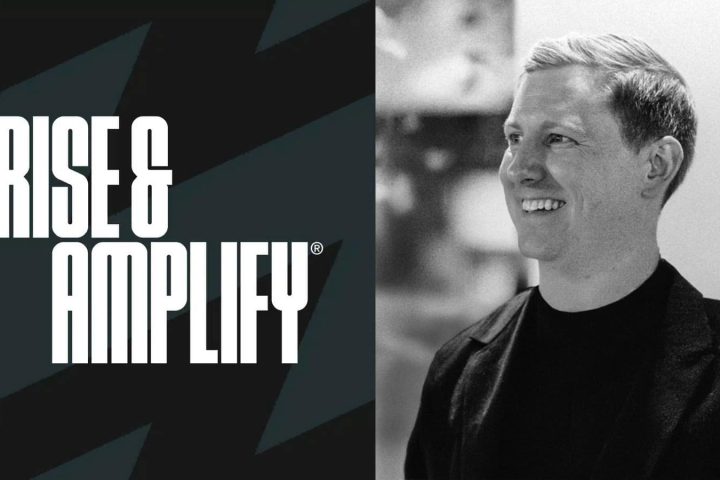
David founder Fernando Musa urges agencies to ‘find the fire again’
The founder, partner and chairman of David says the industry has become fixated on outputs and execution, when the real creative spark comes much earlier.

Fernando Musa, founder, chairman and partner of David and chief executive of Ogilvy Brazil, has argued that creativity is about people rather than tools, awards, platforms or technology, and that agencies need to rediscover the spark that comes before execution.
Musa pointed to shortlists and wins at Cannes Lions for the David and Ogilvy network, including work for Kotex and Dove. But rather than treating awards as evidence that the industry is in good shape, he used the festival as a provocation.
“We cannot use Cannes to justify keeping everything in the same way,” he said. “We need to use Cannes to get inspired, but to do different. We need to wake up and make a different decision tomorrow.”
Fear of losing sight of people
For most of his career, Musa has built agencies around a conviction that creativity can change lives, cultures and businesses. He was involved when David launched 12 years ago, built on Ogilvy’s most celebrated creative legacy, and says its founding idea still stands.
“Since that time, we believed in creativity that can transform lives and things. And that’s me. I was transformed by creativity.”
His greatest fear for creativity is not AI, automation or machines, but that the industry forgets the people it is trying to reach. “The only thing that we have to fear is people, human beings. We start to lose our creativity when we stop looking for people, for the difference, for knowing each other.”
Musa is not opposed to technology. He sees AI as a helpful partner that removes repetition, speeds up research and opens new sources of inspiration, but worries it could make people lazy about forming connections.
“The problem is not AI. It is the human being behind the AI. It is helping a lot because it is saving time for repetitive things. It helps you to get more information, more inspiration, to help you make different connections. But we need to be careful not to become lazy in making our own connections in our brains.”
The bigger risk, he says, is not that AI becomes too creative but that people become too bland. “Sometimes I believe AI might help you to be right, but right in the sense of vanilla right. It is not wrong, but it is just right. I prefer to win with someone who is loving something, or even to lose with something that creates love or hate.”
Selling memories
For Musa, creativity starts not with a prompt, deck or workflow but with noticing something in the world and being moved by it. He describes a walk around a Madrid flea market, where he watched an elderly man selling dolls while a father looked for one for his daughter.
“This guy is not selling toys,” Musa said. “He is selling memories. He is selling emotion. Imagine how many people were connected through those dolls.”
The scene took him back to his own childhood and his grandparents, and to the emotional chain that links strangers through everyday objects. “That, for me, is the core of creativity. We need to keep that spirit open and that idea alive.”
His argument is simple but demanding: moving people requires caring about them. “To work in advertising, to work with creativity, we must love people. It is a difficult time to love people these days, but we need to respect the authenticity of people and the emotions of people.”
Ignition before execution
If he were launching David today, Musa says, he would start not by asking what technology the agency needed, but by finding people who cared. “I would have people who care. There are a lot of people who just don’t care. They are just trying to keep things moving. Show me that you care about what you are doing.”
He would also reshape the creative process. Agencies have long concentrated on delivering the creative output, he says, but as production becomes quicker and more technology-assisted, the most valuable work happens earlier.
“It is not about the execution. It is not about the creative work that comes out, but the creative work before something gets into it. Right after a briefing, right after a problem, that is the ignition.”
Agencies must get back the spark generated by conviction, care, difference and friction, he argues. “We need to find the fire again. We need to find the fire before we deliver the fire. Where are the rebels? Where are the people who are not feeling good about themselves and want to change something?”
That also affects how agencies should be organised. Musa thinks the notion that creativity belongs only to a creative department is outdated. “Everyone who works in a creative industry should be somehow fighting for creativity. Creative department, creative people, I think it is a little bit old school, because everyone can come up with something.”
He is not calling for collaboration as corporate theatre, but for productive disorder. “To make fire, we need different perspectives. The good confusion, a little bit of chaos, helps someone in the room.”
Advice for young creatives
Musa’s advice to young creatives runs against today’s appetite for hacks, frameworks and instant clarity: do the work, keep going and let the shape of the journey become clear later.
“Never give up. Just keep going. You are probably going to understand your story looking back. Don’t try to figure out your journey. Do what you are doing, because someone is writing it and it is not you. You just need to choose day by day.”
He sees resilience as one of the most important creative skills. “People today tend to give up too fast. You don’t understand the movements of your life until you look back.”
Why Miami
Although Musa is based in Brazil, David also has an agency in Miami. It opened there because Burger King was based in the city, and because the city gave access to talent from across Latin America, as well as a particular cultural energy.
“Miami is a hub for Latin America. It is easy to bring talent from Argentina, Brazil, wherever to live in Miami. One of the premises we have at David is, ‘Do I have talent in that market and do I have a client in that market?’”
That approach has helped make David Miami one of the city’s leading creative agencies. Musa says the city’s strength lies in its identity as much as its location. “Miami reminds us that we are in the US, but we are also Latinos in a way. It connects to who we are.”
Amid the AI talk at Cannes, Musa’s message is that the industry should embrace the technology without giving up its soul. AI can speed up repetition, research and production, but cannot substitute for people’s ability to feel, to care and to fight for what matters.
“I might disagree with you, but if you are fighting for something you believe, I am going to respect you. We need people who fight for something,” he said. “It is about people. It is about people who believe, about passion, about fighting for something you believe.”
In this story

Digital Gossip
News, people moves, campaigns, deals and opinion from across the UK’s agencies, marketing, media and technology businesses, written and edited by the Digital Gossip newsroom.
Send us a tip