A year after T-Mobile deal, Vistar focuses on physical-world media and retail
T-Mobile Advertising Solutions marketing head Leslie Lee says the integration with Blis and T-Ads is about substance before splash.

A year after T-Mobile bought Vistar Media, along with omnichannel demand-side platform Blis, the integration is settling into a deliberate, methodical phase, according to Leslie Lee, head of marketing at T-Mobile Advertising Solutions.
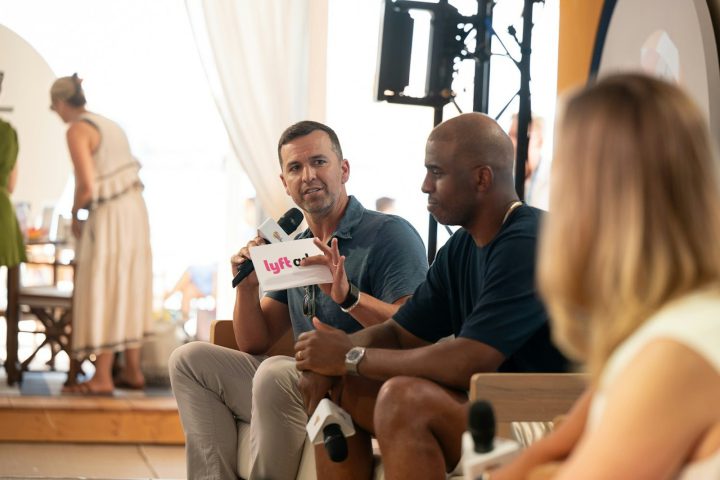
Speaking at IAB ALM 2026 in Palm Springs, Lee, who worked at Vistar for nine years before moving into her T-Mobile role, said the focus is on bringing together a telecoms company’s scale, adtech systems and know-how in real-world media without over-promising.
“A lot of telecoms have gotten into the adtech space before with mixed, or maybe not mixed, results,” she said. “So our strategy really is we’re continuing to do what each company has done very, very well and been the leader in our spaces while we’re building for the next thing… and that will take some time.”
She added: “We want to lead with reality and substance rather than a lot of flash before we’re ready… but it will come.”
From billboards to retail media
Vistar made its name by bringing programmatic technology to out-of-home media, making digital billboards, transport screens and venue displays measurable and data-led. Within T-Mobile, the same skills are now being used across the physical world as a whole, on the basis that consumers do not think in channels.
“As a consumer, you’re not distinguishing in your day, ‘Oh, am I out-of-home right now or am I inside of a store?’ You’re just going about your day,” Lee said.
She said retailers are realising that their audience, not their shelf space, is their biggest asset. “Retailers are finally starting to understand that their most valuable asset is their audience… the people that come and visit their locations, their physical stores, as well as their websites.”
More screens do not mean more revenue
Lee warned retailers rushing into retail media against assuming that more ads are always better. “A lot of retailers have in the past maybe been given some bad advice about more advertising is better,” she said.
There is a limit to how many ads shoppers will accept before the experience suffers, she argued. “There is actually a plateau of how many in-store moments to engage a consumer there are.”
“We’ve seen way better results from retailers that focus on a few really high-quality engagement points within a store… rather than trying to maximise every little corner of that customer experience,” she said.
Vistar helped create the in-store retail media network T-Mobile runs in thousands of its own shops, and that experience is now being offered to other retailers. “It’s really complex for these retailers… all the things – the hardware, the physical site design, installation, connectivity – and now we have the experience of having done that at scale,” Lee said.
Bringing Vistar, Blis and T-Ads together
Blis is known for location intelligence and audience targeting, and the job now is to turn the acquired businesses into a single, coherent offer. Lee said the past year has been about combining capabilities while allowing each unit to keep doing what it does best.
“With retail media specifically… T-Ads had its own division focused on it, Vistar has ours and we’re working to kind of bring those together,” she said.
If it works, the result would combine a telecom-scale dataset with physical media infrastructure and the ability to run campaigns across channels. T-Mobile on its own reaches around 130 million US customers.
Why physical media is back
As AI changes online behaviour, cutting clicks, altering search journeys and filling feeds with synthetic content, Lee said brands are rediscovering the stability of the real world.
“Consumer behaviour online is changing so radically… whereas physical world patterns really don’t change. We still go to work, we still go to the grocery store, we still travel,” she said. “Rebalancing toward predictable, physical world signals that are not really going to change as much… makes for big investment.”
She said measurement is improving too. “Out-of-home has been pretty measurable for a while – there’s just not a ton of awareness of that.” Further progress will come as retailers link exposure to sales: “The more retailers can tap into their own first-party measurement systems and connect in-store sales to campaign exposure, the more it unlocks the next phase.”
From distribution to feedback
Lee believes advertising is moving beyond distributing messages. “When the industry started, we thought we were building distribution systems to get messages out… but actually we’re creating feedback systems where content, advertising and behaviour interact almost in real time.”
“One of the most exciting trends now is connecting media… to true physical consumer behaviours – thinking beyond measuring a click to the full spectrum of how messaging can actually change someone’s physical behaviour,” she said, pointing to mood, movement, purchases and experiences.
Vistar has been quieter over the past year because integration work rarely makes news, but Lee suggested larger moves will follow once Vistar, Blis and the T-Mobile advertising business are fully combined. “We’re ready now… and it will come.”
In the meantime, the company is building infrastructure, combining data safely, refining its retail media strategy and aligning its global plans with T-Mobile’s resources.
In this story

Digital Gossip
News, people moves, campaigns, deals and opinion from across the UK’s agencies, marketing, media and technology businesses, written and edited by the Digital Gossip newsroom.
Send us a tip