Coca-Cola’s AI Christmas ad critics are a vocal minority, argues Andrew Tindall
With most festive ads this year leaning on handmade animation, Coca-Cola has brought back its AI-generated trucks for a third year. Andrew Tindall argues that audience testing, not comment sections, shows how people really feel.
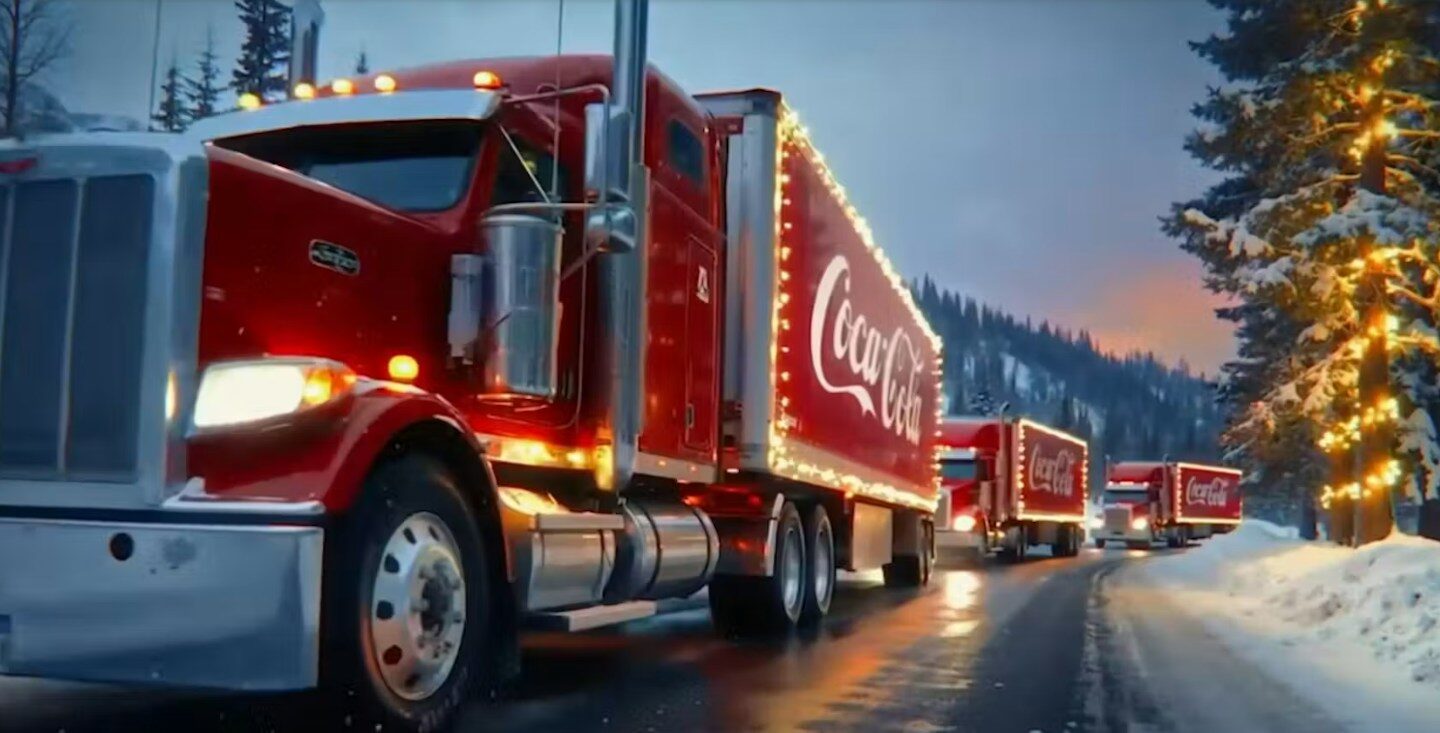
Coca-Cola is running its Holidays Are Coming trucks, made with AI, for a third Christmas, and Andrew Tindall argues that the brand would not have made the ad again if the online backlash against it reflected how the wider public actually feels.
The ad airs in prime time during Gogglebox this weekend, in a year when most other brands appear to have chosen handmade work. Tindall expects a week of angry headlines and comment sections, but says the evidence from three years of testing points the other way.
He opens with the bacon sandwich. In October 2025 scientists urged ministers to outlaw most bacon sold in supermarkets, tying its nitrites to more than 50,000 cases of cancer. That came ten years after the World Health Organization grouped processed meat with cigarettes and asbestos. For a week, he writes, the country seemed united in agreeing that “the bacon sarnie was a Marlboro in a bap”.
Tindall, a Northerner living in North London, recalls reading one of those stories while hungover and walking to his favourite spot in Haringey, the Dusty Knuckle, anyway. Four in five tables there had a bacon butty on them. “What everyone online agrees on and what people actually do are two very different animals,” he writes.
Craft as this year’s Christmas strategy
Tindall points to the brands that have gone handmade this year. Elf chose stop-motion and Levi’s claymation. Barbour and Thatchers both worked with Aardman. Walmart enlisted the Muppets, Prada’s film was animated by hand, Starbucks reached for Sharpies and John Lewis made a puppet dog, Pickles.
He calls this a smart reaction to a year saturated with AI, since visible effort shows a brand cares when anything can be generated in seconds. He co-wrote Putting on a Show with Beth Marchant, a book about how Aardman’s human craft delivers results, and notes that Aardman’s Thatchers Christmas ad has just achieved the top score of 5.9 Stars in System1’s creative testing.
But he warns that craft is “a strategy, not a magic button”. Levi’s claymation ad scored 3.8, while the hand-drawn Prada film got 3.4. Both are above the fashion category average but well behind Thatchers.
Brands that make craft the promise also have to follow through, he adds. Dior has spent the week facing public questions from animators about how its “all hand-drawn” Christmas film was made.
With so many brands treating resistance to AI as large enough to build a Christmas campaign around, Tindall says it is fair to ask what Coca-Cola is doing.
Three years of backlash, three years of high scores
In 2024 Coca-Cola’s AI remake of its most famous ad left Tindall unhappy until System1 tested it with real British viewers and he had to admit he was wrong. That ad scored the maximum 5.9 Stars, and the 2025 follow-up did the same.
Writing over the weekend before the launch, he tested the 2026 ad with 300 people. It scored 5.7 Stars. He says 68% of viewers feel happy watching it, almost double the average UK TV ad, while contempt, the nearest thing System1 measures to genuine dislike, is at 5%, in line with the UK average. The reaction viewers gave most often was: “Christmas Coca-Cola adverts? ’Tis the season finally!”
Tindall says Coca-Cola, one of the most sophisticated marketing businesses in the world, would know if the AI trucks were doing damage. “Instead, they’re back for a third run. It must be working.”
Why a small share looks like a crowd online
He draws on his own recent experience. The week before, he faced a wave of criticism from John Lewis haters after showing that just 6% of the country truly disliked that ad. A screenshot of his post about the research spread on X and drew nearly 400 comments, most of them accusing him of using fake research to push a “gay agenda”.
His point is that 6% of millions can populate every comment thread in the country. Hostility spreads further and faster online than mild approval, with bots helping it along, so the loudest few end up feeling like everyone.
He accepts the noise has effects. In September Tesco brought out eight bacon and ham lines with no added nitrites, pointing to a 360% rise in online searches. Outrage primes people, he writes, and AI could follow the same path.
Yet when System1 showed AI ads to nearly 3,000 people, viewers could not tell AI had been used unless asked, and the ads they believed were AI-made drew the strongest positive response. “How an ad was made is our obsession, not theirs,” he writes, unless a brand has made the process its promise, as Dior did.
He says he would change his view if Coca-Cola’s contempt score rose above average or its Star Rating fell year on year. Neither has happened.
Three questions before reacting
Tindall argues that whether an ad uses craft or AI, people judge it on how it made them feel. Before reacting to a bad day on LinkedIn, he suggests marketers ask how many people actually feel negatively and how strongly, using a representative sample rather than the comments; whether the negativity is above normal, given that every ad has its 10%; and whether it is getting worse or simply louder.
Coca-Cola has asked those questions for three Christmases in a row, he says, and British viewers love the trucks. He predicts they will return next year and score 5 Stars again.
In this story

Digital Gossip
News, people moves, campaigns, deals and opinion from across the UK’s agencies, marketing, media and technology businesses, written and edited by the Digital Gossip newsroom.
Send us a tip