
Lynn Lester and David Pugh-Jones discuss grief, ADHD and work on Slow the F*ck Down
A live recording of Emma Harris’s podcast drew personal accounts of loss, neurodiversity and dropping the corporate mask from the events chief and the Corpora.ai CMO.
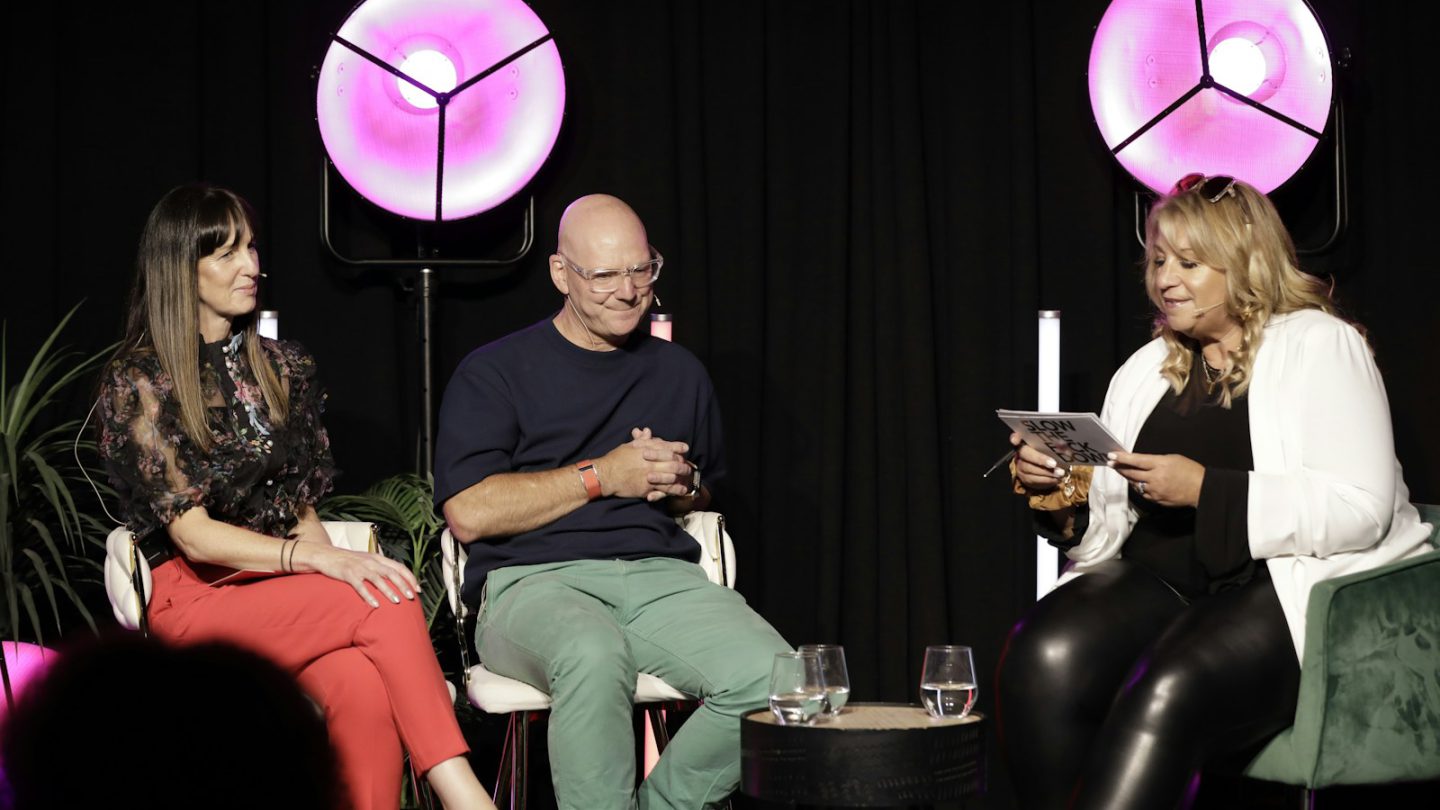
A live recording of podcast Slow the F*ck Down featured events and awards executive Lynn Lester and Corpora.ai CMO David Pugh-Jones in a discussion of loss, neurodiversity and the strain of putting on a corporate persona.
Host Emma Harris launched the podcast while in intensive care in New York, having survived a cardiac arrest. She told the audience the condition kills 91% of those it affects.
Her guests were Lester, who has spent 25 years building a media company’s events and awards business, and Pugh-Jones, who co-founded Neurodiversity in Business and is a trustee and former chair of the charity.
Harris opened, as she does with every guest, by asking how they were doing. Lester, who was two days into running the event hosting the recording, said the podcast’s title felt appropriate. Her holiday was due to start the next afternoon.
Loss and perspective
Talk soon turned to Lester’s upbringing in Clydebank. She lost her brother, who was killed, at 12, her mother at 16 and her father at 19. Her sister died two years ago.
People tell her life is too short, she said, and she has known that since childhood. “From that moment, I thought, OK, I appreciate everything I’ve got,” she said. The experience shaped how she treats people and leads teams, and gives her a particular calm at work. The small crises that alarm event managers, such as a late speaker, incorrect cue cards or a dropped mic, do not affect her in the same way, because nobody will die over them and she has already lived through the worst.
She keeps her ways of resetting deliberately small: time with family, her cats and dog, the weight training she took up last November, and dancing in the living room, to the dismay of her partner and son. She still follows her father’s advice that anyone who catches themselves clock-watching in a job should leave it.
Diagnosis at 50
Pugh-Jones received an ADHD diagnosis at 50, which he pursued after co-founding Neurodiversity in Business in 2022. His youngest son was nonverbal until the age of seven, and he recalled how taking him to school when it rained could involve coaxing him along step by step. The experience taught patience to a man who describes himself as the most impatient person anyone could meet.
He said around 1,000 companies now use the charity’s yearly research, and that he sees the rise in diagnoses as society finally recognising how many creative people approach problems differently.
Dropping the mask
Both guests talked about the toll of presenting a corporate version of themselves. Lester recalled a colleague confessing she had assumed Lester’s permanent good humour was put on, only to discover it was real after joining her team. Pugh-Jones said he concealed parts of his personality early in his career, worried it would count against him, and only eased up once he saw how many others also struggled with imposter syndrome.
Working Class to World Class, Lester’s own podcast, celebrates people who have succeeded against the odds. She said part of the motivation is legacy, keeping her late family present in what she does and leaving a legacy of her own.
She described finding safety on stage, a place many people fear. At a school talent show she told jokes her brother had written for her, and she said holding the microphone was the first time she felt safe as the children who had bullied her laughed with her. When she hosts events now, she thinks about how to put the audience at ease.
AI and advice
Pugh-Jones offered a more optimistic view of AI than much of the rest of the day’s programme. Through his work with a tech entrepreneur, he sees it being used in drug discovery, cancer trials and kidney dialysis, work he believes deserves more attention. Harris spoke strongly in favour of sharing positive AI stories to balance the pessimism.
Asked for a final piece of advice, Lester said her resolution for the year was to spend her time only with people she really likes and to stop postponing catch-ups she has been meaning to organise. Pugh-Jones encouraged the audience to seek out joy and avoid what he called “oxygen thieves.” Harris closed with her own rule: find your tribe and stay with it.
In this story

Digital Gossip
News, people moves, campaigns, deals and opinion from across the UK’s agencies, marketing, media and technology businesses, written and edited by the Digital Gossip newsroom.
Send us a tip