
Plenitude’s glow-in-the-dark picture book aims to cut bedtime energy use
‘Goodnight Light’ uses glow-in-the-dark ink to turn fear of the dark into a lesson in saving energy.
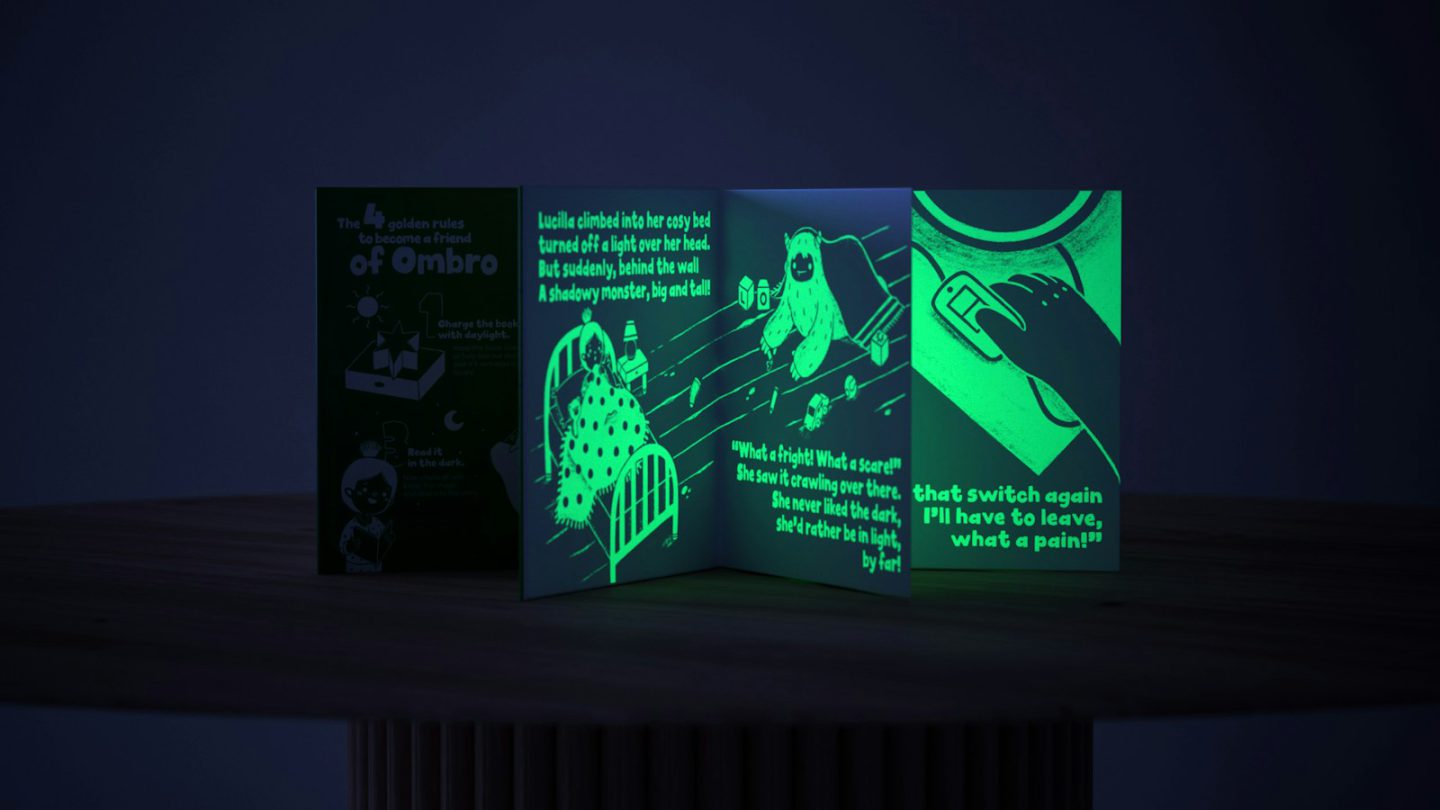
Energy brand Plenitude has launched ‘Goodnight Light’, a campaign centred on a picture book whose pages reveal themselves only once the lights are off, in an effort to turn fear of the dark into a lesson about saving energy.
Created by TBWA\Italia, the campaign draws on research across Italy, France and Spain showing that three in four children aged 9 or under are afraid of the dark. Many families respond by leaving a light on overnight to ease anxiety at bedtime.
The idea is to change that habit by making darkness playful and rewarding rather than frightening.
“The idea started from a behavioral insight: children are afraid of the dark and the most common solution parents use is leaving a small light on throughout the night. While it might seem like a small habit, when you think about it happening in millions of homes, it actually adds up to a lot of energy waste,” said Vittoria Apicella, creative director at TBWA\Italia.
“Plus, it means kids are growing up with habits that aren’t very eco-friendly. So we asked ourselves: what if the dark itself could become something children look forward to? That’s how the idea emerged, a bedtime story that only appears when the lights go out.”
Instead of telling children to change their behaviour, the team presented darkness as the way into something magical. “Emotionally, children want the light on; environmentally, the best thing we can do is switch it off,” Apicella said.
“By turning darkness into the trigger that reveals the story, we created a small reward mechanism. When the light goes off, something magical appears. Suddenly, the action we want, saving energy, becomes part of the game.”
A story that appears at night
Plenitude says it is the first book for children intended to be read solely in darkness. It is printed in glow-in-the-dark ink, so the pages look blank by day and the illustrations appear once night falls.
Its heroine is Lucilla, a girl who makes friends with Ombro, a clumsy little monster who stands for darkness. Their friendship gently recasts the night as welcoming rather than scary. When the story is finished, the book folds into a star-shaped bedside lamp that works as a nightlight.
The agency’s main challenge was stopping the sustainability message from swamping the story, since children would lose interest if the lesson felt too obvious. The book had to work as a genuine children’s book first.
“The sustainability message sits underneath, but it’s never preached. Kids follow the adventure of a little girl who discovers that the dark isn’t scary after all,” said Frank Guarini, creative director at TBWA\Italia.
The book comes with glow-in-the-dark stickers of the story’s characters that children can stick beside light switches. Guarini said the rule is that “only when all the stickers glow and all the lights are switched off, it’s time to read the good night book. This adds a lovely bedtime ritual.” The stickers serve as playful prompts around the home to turn off lights before bed.
Making ink that hides by day
The creatives said producing the book was “quite complex”. “We worked with photoluminescent pigments that absorb light and release it only in the dark. The biggest challenge was balance,” Guarini said. “The illustrations needed to remain invisible in daylight, because the book presents itself completely blank in the morning, but still be bright enough to read once the lights were off.”
The team tested a range of pigment densities, paper stocks and exposure times, and went through many prototypes before reaching a glow that felt magical rather than merely technical.
“Another fun challenge was designing the star shape the book takes on once you’re done reading. We aimed to create a child-friendly design that would soak up sunlight during the day and double as a nice night lamp near your bed at night,” Guarini said. The finished book is produced with a specialist silk-screen process using luminescent pigments that store daylight and give it off after dark.
Reaching parents too
Although aimed at children, the campaign is also intended for parents, with the agency arguing that real impact on sustainability depends on changing habits.
“It can be difficult to convince adults to alter their mindsets, but the younger generation has the potential to drive change in reducing energy consumption,” Apicella said.
“The project is designed for two key audiences. Children engage with the story and experience the magical reveal of glowing pages, learning how to save energy in the process. Meanwhile, parents can appreciate the energy-saving message behind it and appreciate the brand, Plenitude, that shares it.”
Because the aim is behaviour change rather than awareness, success will be judged on engagement and family habits. The team will gather feedback from parents, including whether children start asking for lights to be switched off so they can read the book, and will track photos and videos of bedtime rituals shared by families. It also hopes to prompt wider conversations about energy among younger people.
EY+MC Saatchi has built a digital ecosystem for the campaign, spanning social channels, interactive content and its own landing page. Apicella said translating a physical idea online was difficult. “The book only truly exists when the lights go out, which is the opposite of how digital platforms work,” she said.
“Focusing on children’s real reactions, glowing pages and bedtime rituals helped translate the idea online. In a way, the digital content became proof that something magical was happening in the real world.” She added that the landing page plays with the theme of darkness and that educational content has been created for TikTok.
The campaign is being rolled out in Italy, France and Spain, and the book, a limited edition, will be sold in selected Plenitude stores in Italy and in other shops and libraries.
In this story

Digital Gossip
News, people moves, campaigns, deals and opinion from across the UK’s agencies, marketing, media and technology businesses, written and edited by the Digital Gossip newsroom.
Send us a tip

