Omar Karim on what a simulated fruit fly taught him about live AI video
The film director streamed a simulated fruit fly's dreams for a full day. He argues the experiment points to new ways brands could use real-time AI video.
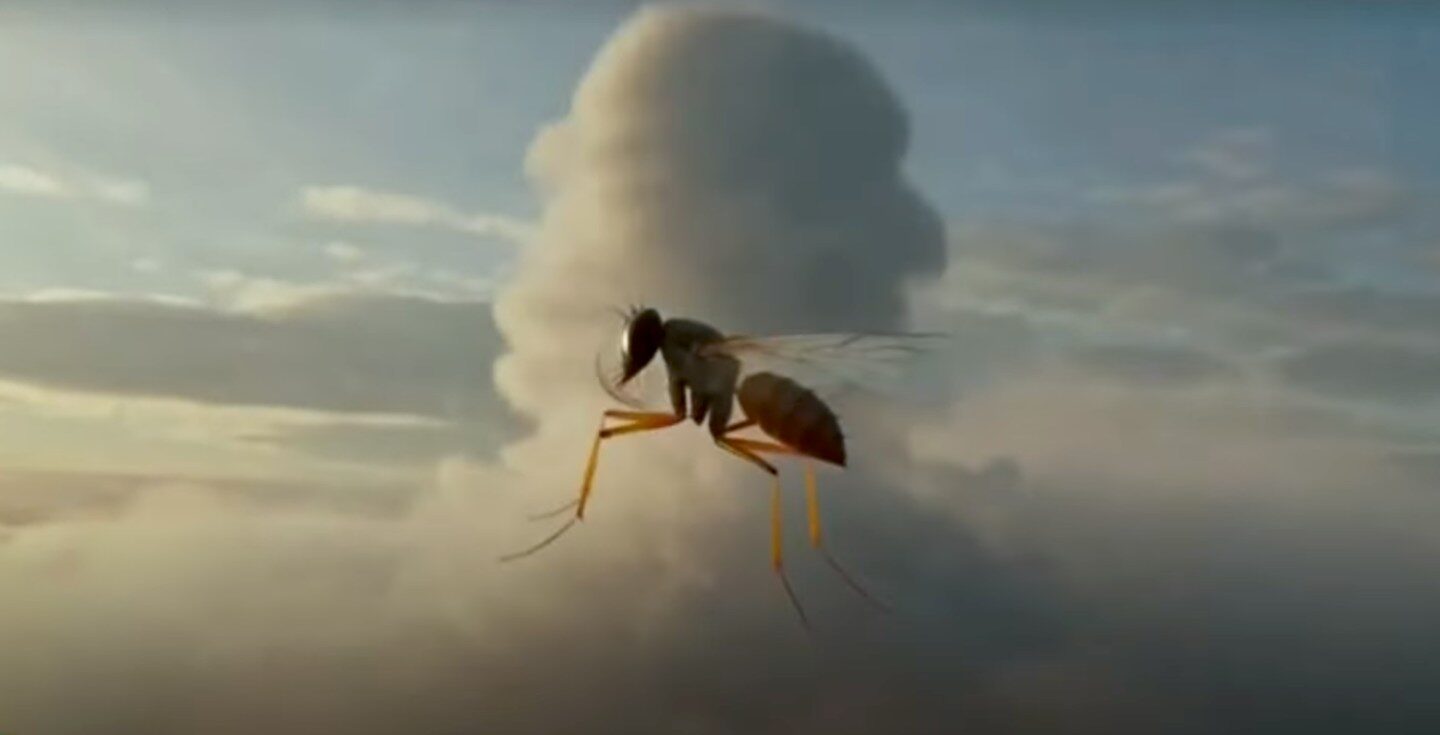
Film director Omar Karim argues that creativity is not a purely human trait, and that real-time AI video opens up formats brands have barely tried. His case rests on an experiment in which he linked a simulated fruit fly brain to a live video system to find out what a fly might dream about.
Karim, who describes this as how he spends his free time, says the first thing the fly dreamed was that it was a horse.
“I lost my mind,” he writes. He took it as a sign that the fly longed for freedom, movement and open fields, until a friend asked: “Do you think that’s because it’s a horse fly?” Karim admits the thought had not occurred to him.
Why he built a dreaming fly
Karim does not accept that creativity belongs only to people. He gives the example of a bird building a nest, where a better nest does its job better, and says this is the case he will make in December, when he takes part in a Somerset House debate.
Two developments let him take the idea somewhere stranger than birds. First, researchers published a map of how a fruit fly's nervous system is wired, and anyone could download the data and build a simulation from it. Before long, people online had the fly cooking.
Second, a video model arrived that could generate 15 seconds of footage in nine seconds. Karim argues that the six seconds to spare matter more than they first appear: while one clip is playing, the system can produce the next one, which means the output can stay on air.
Others were already generating endless new versions of their favourite sitcoms in real time. “I had a fly’s brain,” he writes.
A full day on air
Activity in the simulated brain was passed to a system that converted it into instructions for the video model. Karim says he never told it to produce a horse, and once it was up and running nobody needed to steer it. The stream ran for a whole day.
At one point the fly seemed to be travelling through space, before turning back into a fly, something he says “completely floored” him. An on-screen readout shows which animal the system believes the fly is at any moment, and when the credits run out, the fly wakes up.
He admits he cannot tell what share of the footage originates in the simulated neurons and what share in the AI's reading of them, describing most of it as “gloriously abstract”.
Karim stresses he is not proposing that anyone needs a fly that dreams. It was simply the cheapest route he could find to understanding live AI video.
Interactive films, football and zombie newsreaders
The fly was not his first attempt. Karim had already tried to make a film that watches the viewer: the webcam turns on and the story shifts depending on how the person reacts, so smiling, frowning or holding something up to the camera sends it in a different direction.
He could not get it to work properly, but liked the idea that something happening in a living room could alter the next shot.
He also tried live sport, since that is what people tend to watch live. Karim says he dislikes football and knows nothing about it, and found watching an AI play a game he did not understand, with the players' bodies constantly morphing, “quite disturbing”.
Next came a live news channel, with real headlines going in and AI video coming out. It worked but was dull, little more than people reading the news, so he turned the presenters into zombies. “Watching zombies report on sewage in the Thames was hilarious,” he writes.
What brands could do with it
Karim says an announcement that a company can produce 15 seconds of content in nine seconds means little to him, as he does not think in numbers. A film running for a whole day, where he can see the point at which it breaks, is something he can understand.
His team recently produced a three-minute piece in which lighting and character consistency caused very few problems, although flickering is still hard to manage. The question that needed more thought, he says, is the one he would ask of any film: “What are we telling people, and why would anyone stick around?”
He argues that long-form content is easy and fun to produce, and the interesting part is making something that works as a story people want to follow. It then has to win a place in a feed alongside prank videos and guides to fixing a washing machine, with the algorithm acting as gatekeeper between creator and audience.
For brands, Karim would like to see what happens when the audience is given something to do, such as holding up a packet of crackers to the camera to alter the film. He suggests keeping a live TV show going over two or three days to see where viewers take it, and says he would try a real-time AI reality show.
He also points to clipping, noting that streamers already rely on people who cut the highlights out of hours of footage and share them on their own pages. Combining that with live AI content, he argues, offers a route to viewers who missed the stream.
Karim calls the fly his “mold-in-the-petri-dish moment”. Having found out what a fly dreams about, he now wants to know what else it can do, including whether it could be shown a mood board and left to make the creative decisions on a fashion shoot.
“It sounds nonsensical,” he writes. “But if a bird can build a better nest, who’s to say a fly can’t have taste?”
In this story

Digital Gossip
News, people moves, campaigns, deals and opinion from across the UK’s agencies, marketing, media and technology businesses, written and edited by the Digital Gossip newsroom.
Send us a tip